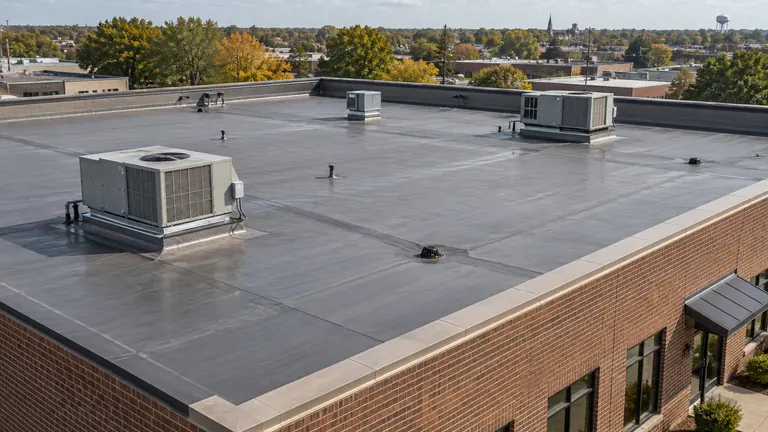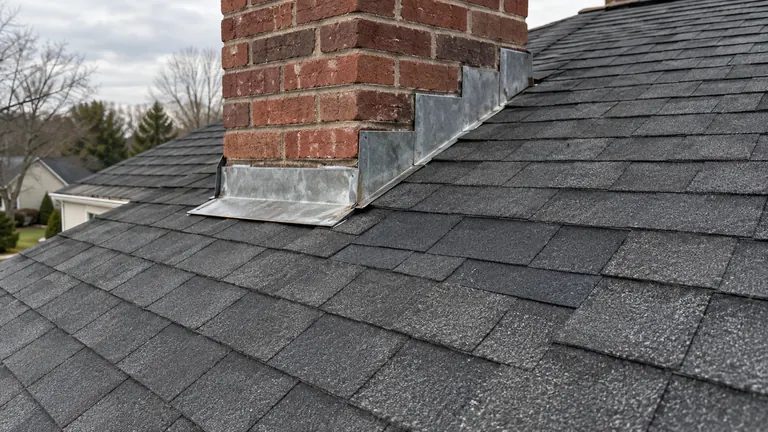
The practical starting point
A roof’s age, a leak or a storm report is not enough to choose replacement. The useful question is whether a repair can restore dependable performance in the surrounding assembly—and at what cost, uncertainty and remaining risk. This guide helps you evaluate the evidence, compare realistic alternatives and recognize when a second opinion is worthwhile.
Your project, our permitting team.
Ohio Roofing Co. confirms the requirements for your address, prepares and submits required roofing applications, and coordinates reviews and inspections. The office contacts, forms, and approval checklists in this guide explain the work we handle—not tasks you need to take on yourself. We explain fees and any owner authorization or property-specific consent needed. Approval decisions remain with the responsible authority.
What to keep in mind
- Diagnose the failure and assess the surrounding roof before choosing a scope.
- Compare localized repair, staged replacement and full replacement where appropriate.
- Include hidden conditions, access, future work and disruption in the cost comparison.
- Separate construction recommendations from insurance coverage and permit decisions.
Identify the failure before selecting the remedy
Ask for a roof-area map and a written explanation of the problem. A complete assessment should distinguish covering defects from problems at penetrations, walls, edges and drainage. It should also identify signs that moisture or structural conditions need another specialist. The location of an interior stain is a starting clue, not a precise roof coordinate.
Record symptoms over time. Does the leak occur in ordinary rain, only when wind comes from one direction, after HVAC service, or during a thaw? Has the same area been repaired before? Give the assessor earlier invoices and photos so the investigation does not start from an incomplete history.
Ask what is known, what is inferred and what remains concealed. A contractor may need limited exploratory work to understand layers or substrate condition. That investigation should have a scope, owner authorization and a plan to restore weather protection.
Commission an inspection that can distinguish competing causes
Write down the decision the inspection is supposed to support. You may need to know whether a chimney-area repair is sufficient, whether several slopes have become unrepairable, or whether a low-slope addition can remain while the main roof is replaced. These are more focused questions than “Is my roof bad?” Give the assessor the earlier repair history and explain whether you are comparing bids, responding to an active leak or planning future work. The assignment should help determine the investigation, not prejudge its result.
Ask what areas were actually inspected and what access was unavailable. A ground observation, drone image, attic review and close roof assessment provide different information. None should be described as revealing concealed conditions it could not observe. Request a clear limitation statement so you can judge how much confidence to place in the recommendation. If the most important transition could not be assessed, the report should say whether additional investigation is needed before choosing a permanent scope.
A useful diagnosis separates the path of water from the visible interior symptom. Water can travel along materials before becoming visible, and more than one source can affect the same room. Ask the assessor to explain the proposed cause in language you can follow and to identify what evidence would contradict it. This is not an invitation to conduct your own risky testing. It is a way to understand why the proposed repair addresses the mechanism rather than simply the spot where the stain appears.
If exploratory work is recommended, obtain a defined scope, cost and restoration plan. Clarify which materials may be opened, who authorizes expansion, and how the building will remain protected. Ask how the findings will be documented and when you will receive a revised recommendation. Paying for a targeted investigation can be a different decision from committing to replacement. Keeping those stages separate lets you make the larger choice with better information instead of treating a preliminary assumption as an established diagnosis.
Sort evidence from symptoms and sales shortcuts
A recommendation becomes more useful when it identifies the extent, severity and distribution of defects. Request labeled photos and an explanation in plain language. Ask whether the photos represent isolated locations or repeated conditions across the roof. Do not accept a close-up with no location or context as proof that every slope needs replacing.
Be cautious with universal rules such as “every roof of this age is finished,” “a certain number of hail marks always means replacement,” or “a repair above this percentage is never worth doing.” These can obscure different materials, installation conditions and ownership goals.
A second opinion is valuable when recommendations conflict, the proposed cost is substantial, or the explanation does not match the observed problem. The goal is not to find the most reassuring answer; it is to identify the evidence that changes the decision.
| Observation | Useful next question |
|---|---|
| One interior stain | Is the source roofing, condensation, plumbing, equipment or a wall transition? |
| Missing or damaged covering | Is damage localized, and can adjacent material accept a compatible repair? |
| Repeated leaks after earlier repairs | Were the causes different, or did prior work fail to address the same detail? |
| Dents or surface marks after hail | What functional damage is documented, and what remains uncertain? |
| A roof of uncertain age | What condition and repairability evidence supports a remaining-service-life opinion? |
Read a condition report with a confidence-and-consequence lens
For each reported defect, note the observation, its location, the proposed explanation and the consequence if left unresolved. Then ask how certain the assessor is about the explanation. This separates a clearly documented opening from a suspected moisture path or an inaccessible area. The confidence level should affect the next step: a confirmed local defect may support a defined repair, while an uncertain widespread problem may justify further assessment before either patching or replacement is priced as the final solution.
Distribution matters. A few photographs may show serious damage but still not explain whether it is isolated or repeated across the roof. Ask for a roof-area summary identifying where similar conditions were found and where they were not. A diagram with simple area names can be more useful than a long collection of unlabeled close-ups. The owner should be able to connect the proposed quantity of work to the reported condition without having to guess what each photograph represents.
Consider consequence separately from extent. A small defect over critical electrical equipment or valuable inventory can deserve prompt attention even when the surrounding roof remains serviceable. Conversely, an appearance concern may be important to the owner without being evidence of immediate water-entry failure. Ask the report to distinguish urgent protection, planned repairs, monitoring and aesthetic decisions. This avoids reducing every finding to a single condition score that hides important differences in risk and timing.
When two opinions conflict, compare their evidence and assumptions before comparing their recommendations. Did one inspect an area the other could not access? Did they evaluate different scopes or assume different retained conditions? Ask for written clarification of the disputed point and consider an independent qualified assessment where appropriate. The objective is not to average two conclusions. It is to determine which unresolved fact changes the choice and how to obtain reliable information about that fact without creating unnecessary openings or committing prematurely to a much larger project.
When a focused repair deserves serious consideration
A repair is worth evaluating when the problem is limited, the surrounding assembly remains serviceable, and a compatible detail can be installed without damaging adjacent work. Examples to investigate include a specific flashing defect, a limited puncture or localized covering damage. The repair must address the source and connect reliably to what remains.
Ask for the repair boundary, retained components, limitations and follow-up plan. If the contractor will replace a pipe flashing but leave nearby deteriorated material untouched, understand that boundary before deciding whether the scope meets your goal.
Repairability includes access and labor as well as materials. A small area on a steep, complicated roof can require significant setup. A low-slope system may require product-specific preparation and compatibility checks. A lower total price does not mean a simple job, and a higher unit cost does not automatically make the repair unreasonable.
- The failure is identified with evidence rather than guessed.
- The surrounding material can be worked on and tied into appropriately.
- The repair product and method suit the existing assembly.
- Concealed deterioration has been investigated or given a clear contingency.
- The proposal defines exclusions, warranty scope and follow-up.
What a complete localized-repair proposal should contain
A repair proposal should identify the roof area and the defect it intends to correct. Ask for the boundary of removal, the components that will be replaced, the materials retained and the connection between new and old work. If the proposal addresses a chimney, skylight or wall, ask whether adjacent masonry, siding or trim must be disturbed and which trade restores it. A short description such as “seal leak” leaves too much uncertainty about what will actually be changed.
Discuss how the contractor will decide whether adjacent material remains suitable once the area is opened. A repair can become more extensive if brittle covering, deteriorated decking or hidden damage prevents a reliable connection. Agree on how that discovery is documented and priced, and who authorizes a revised scope. This is not a reason to assume every repair will expand. It is a practical way to avoid an open roof becoming the setting for an improvised agreement that neither party fully understands.
Ask what the warranty covers and what remains outside the repair. A warranty limited to the replaced flashing does not imply coverage for every leak anywhere on the roof. The limitation may be reasonable, but it should be clear. Request a follow-up process for a recurring symptom, including how to submit observations and what information the contractor needs. Keep the repair record with the original diagnosis so a later assessor can see both the intended correction and the evidence supporting it.
Finally, distinguish a permanent localized repair from temporary stabilization. Both can have a legitimate role, but they answer different questions. A temporary measure needs an expiry or review plan, a monitoring responsibility and a route to the permanent decision. If the roof is intended to remain for several years, ask whether the proposed repair supports that goal or merely reduces immediate exposure while further work is arranged. The lower price is meaningful only when you understand the performance objective, remaining uncertainty and obligations after the contractor leaves.
When replacement becomes the more useful comparison
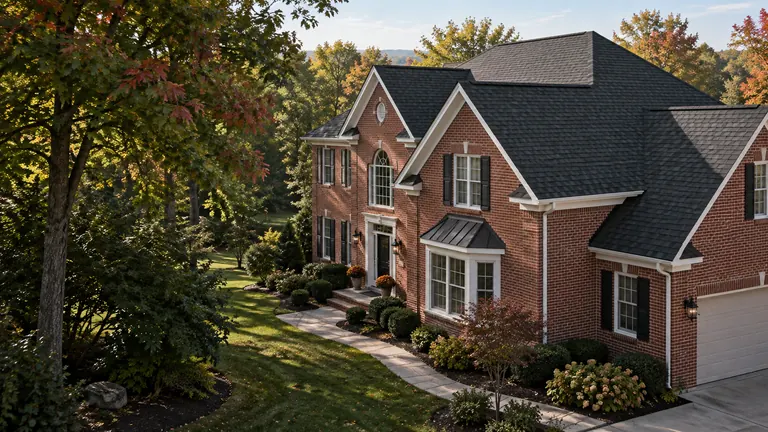
Replacement deserves evaluation when failures are widespread, the surrounding materials cannot accept a dependable repair, concealed deterioration is extensive, or repeated interventions leave the building difficult to maintain. These are assessment questions, not a fixed checklist that automatically condemns a roof.
Ask what replacement will change beyond the visible covering. A new roof can retain a bad drainage layout or unresolved attic-moisture problem if those items are excluded. The replacement scope should name the causes it resolves and the problems requiring separate work.
A whole-roof recommendation should explain why a smaller intervention is unsuitable. Conversely, if replacement is the appropriate long-term plan but cannot happen immediately, request a separately priced stabilization or temporary repair with realistic limits.
Specify what replacement will fix—and what it will not
Whole-roof replacement should begin with a list of the problems the new assembly is intended to resolve. That list may include worn covering, failed transitions, deteriorated deck areas, inadequate drainage or coordination with planned equipment. Ask where each correction appears in the written scope. If the proposal replaces the surface but leaves the cause of recurring moisture outside the contract, replacement may not produce the result you expect even if the new material is installed correctly.
Record the removal limits. A proposal should explain which layers are removed and which remain, along with how the deck or substrate will be assessed. Ask how concealed deterioration is handled and how structural questions will be escalated. Do not interpret a deck allowance as unlimited authority to improvise framing work. The responsible contractor, designer and permitting office should determine the appropriate response where the actual condition differs from the assumptions used in the initial proposal.
List transitions individually enough to make the comparison useful. Chimneys, walls, valleys, skylights, edges and equipment penetrations can be more consequential than a minor difference in the covering’s product label. Ask whether components are replaced, reused or excluded and why. If another trade is needed, identify who hires and schedules it. A complete replacement is a coordinated scope, not a promise that every component attached to the building automatically becomes new or falls under one warranty.
Compare the replacement plan with the documented repair alternative using the same ownership goals. If you expect to add solar soon, address that timing. If the building must stay occupied, compare disruption and daily protection. If a future sale is part of your planning, retain records that explain the work without claiming a guaranteed resale return. A replacement decision is strongest when it explains the condition, the corrected mechanisms, the remaining exclusions and the long-term responsibilities, rather than relying solely on the age of the old roof or the attractiveness of a new color.
Evaluate partial replacement and staged projects
One roof area may differ from another in age, material, condition or use. Replacing a garage roof or a distinct addition can be a reasonable option to investigate without automatically replacing the main house. But the boundaries need a technical explanation.
Ask how the new area will terminate, whether shared valleys or transitions need broader work, and how later phases will connect. Discuss appearance, product availability and warranty boundaries. A staged project can increase mobilization and coordination costs, so compare the combined future work rather than only the first phase.
For a business, phasing may reduce operational disruption but introduce more temporary conditions. Have the contractor explain daily protection, access and drainage during each phase. Do not schedule a phase that leaves an unresolved active failure outside the work area.
Test whether the phase boundary is technically and financially sensible
A phase should usually correspond to a defensible roof area, not simply to the amount of money available this month. Ask the contractor to identify how the work begins and ends at valleys, walls, changes in elevation or other transitions. A line drawn across a continuous problem may leave an unreliable connection or require substantial rework in the next phase. The proposal should explain why the selected boundary can perform acceptably while the remaining roof stays in place.
Prepare a phase schedule that includes investigation, temporary protection, permanent work and later reassessment. State the condition that would trigger earlier action on the retained area. This might be a documented change identified by a qualified assessment, not merely the passage of a guessed number of years. If the plan depends on a temporary repair, identify who maintains it and how the owner will know when it needs attention. A staged project needs active management, not an assumption that the unfinished portion can be forgotten.
Compare the combined costs of the phases, including repeated setup, disposal arrangements, equipment coordination and potential product differences. A staged approach can still be worthwhile because it spreads expenditure or reduces disruption. The point is to make that tradeoff explicit rather than assuming the sum of smaller jobs will match a single coordinated replacement. Ask which work done now will remain useful later and which may need to be removed or repeated when the next phase begins.
For businesses and rentals, phase boundaries also affect people below the roof. Identify noise-sensitive spaces, entrances, operating hours and areas where water intrusion would interrupt essential activities. Coordinate temporary drainage and equipment access across the whole building, not only the area receiving new material. Keep a roof plan marking the date, scope and warranty for every completed phase. Future contractors then have a reliable record of what differs from one area to another instead of treating the entire property as one uniformly aged installation.
Do not confuse repair, coating, recover and replacement
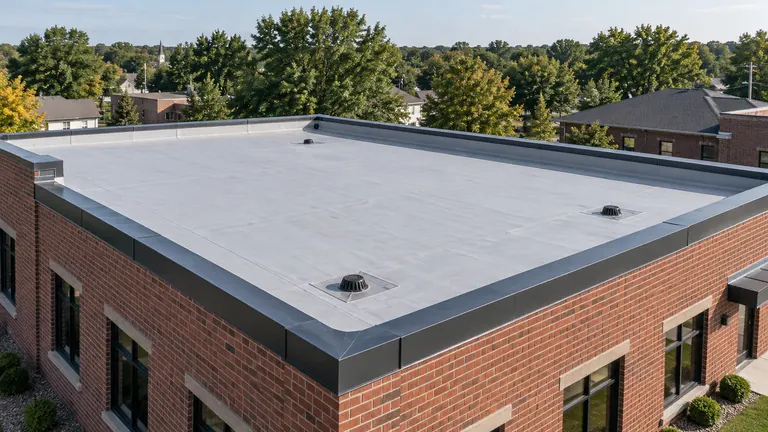
These terms describe different scopes. A coating renews or adds a compatible surface treatment to a suitable substrate; a recover adds a new covering over retained roofing; tear-off replacement removes existing material before rebuilding the specified assembly. A proposal should state which is intended.
Before a coating or recover, ask how the contractor establishes existing condition, moisture, attachment and compatibility. An attractive surface cannot establish that the retained layers are dry or sound. The applicable code, product requirements and substrate condition determine whether an option is viable.
Have the proposal identify all preparatory repairs, testing, drainage corrections and exclusions. If the roof is low-slope, use the commercial guide’s option matrix. Avoid interpreting a manufacturer’s coating warranty as approval to coat any existing roof.
Evaluate retained layers before accepting a restoration label
Start by asking the proposer to define exactly what “restoration” means in its offer. It may describe cleaning and coating, localized repairs, a recover assembly or a broader package. Those options have different preparation requirements and limitations. Request a layer-by-layer description of what remains and what is added. The owner should be able to distinguish a surface treatment from replacement of underlying material, and should understand which existing defects are corrected before the new work is applied.
Condition assessment is central to retaining material. Ask how the contractor evaluates moisture, substrate integrity, attachment and compatibility for the proposed system. Different investigation methods have limitations, so ask how findings are confirmed and which areas remain uncertain. Do not regard an attractive coating sample or a long warranty term as proof that the existing assembly qualifies. The relevant question is whether the actual roof, after the specified preparation and repairs, meets the requirements for the proposed work.
Review details and drainage separately from the main roof field. A coating may not solve an unsuitable transition or a drainage configuration that leaves recurring problems. A recover can affect heights at curbs, edges and drains. Ask the contractor to show how those conditions will be treated and which changes are included. Product compatibility should be established by the responsible professional and manufacturer information, not by assuming that two materials with similar appearance can be combined.
Finally, compare the maintenance and future replacement implications. Ask what inspections or care the proposed system requires, how later repairs are performed, and how retained layers affect a future project. Do not assume a lower-demolition option is automatically the lowest total-cost choice or that tear-off is always the superior answer. The decision should follow documented eligibility, a complete scope and the building’s objectives. If key retained conditions cannot be established, additional assessment may be the next purchase—not a larger coating allowance or an immediate commitment to replacement.
Investigate what the covering may be hiding
Ask whether the assessment can evaluate decking, insulation and supporting structure, and what it cannot see. A remote image or ground-level photograph does not establish concealed condition. If testing is proposed, ask what it can reveal, how findings will be confirmed and who will restore the test locations.
Attic frost or repeated winter moisture may require evaluating air leakage, insulation and ventilation strategy. Replacing the covering without addressing that mechanism can leave the symptom unresolved. A vented attic, an unvented assembly and a commercial insulated deck require different approaches.
Where structural movement, suspect hazardous material or significant moisture damage is involved, get the appropriate qualified professional involved before choosing a cosmetic fix. Do not let a demolition allowance become permission to improvise structural repairs.
Separate water entry, condensation and material deterioration
Moisture is a symptom category, not a single diagnosis. Water may enter through an exterior detail, appear because indoor air reaches cold surfaces, or involve equipment and other building systems. Multiple mechanisms can coexist. Ask the assessor to connect the timing, location and condition evidence to the explanation. A roof that leaks during wind-driven rain may need a different investigation from an attic that develops frost during prolonged cold weather, even if both produce a ceiling stain.
Document building changes that preceded the problem. These can include insulation work, altered ventilation, new equipment, a bathroom renovation or a change in occupancy. Such changes do not prove causation, but they give the assessor a useful timeline. Include prior repairs that appeared to help and how long the improvement lasted. Do not remove or cover evidence solely to make the roof look better before the inspection; ask the professional how to document and address it safely.
When concealed deterioration is suspected, ask which qualified party should evaluate it and what information is needed. Roof covering replacement does not itself establish the condition of supporting structure. Likewise, a remote image cannot confirm that insulation is dry. Investigation should have authorization, defined limits and a restoration plan. If suspect hazardous material is encountered, avoid further disturbance until the appropriate assessment is obtained. Keep these decisions separate from ordinary cosmetic repairs and routine disposal pricing.
The permanent scope should distinguish stopping the moisture source from addressing affected materials. Interior staining may need restoration after the cause is corrected, but painting is not evidence that the mechanism has been resolved. Ask how the team will confirm the relevant correction and what observations would warrant follow-up. Retain the diagnosis, investigation results and final work description together. This gives a future assessor a coherent history and helps prevent repeated surface repairs when the unresolved issue lies elsewhere in the building assembly.
Include Ohio approvals and historic constraints
We confirm your final scope with the responsible local official, distinguishing covering-only work from sheathing or framing work. Our team prepares and submits required roofing applications and coordinates reviews and inspections. If investigation changes the scope, we manage the revised determination and necessary application updates, including inspection hold points.
For a historic or design-controlled property, our team obtains guidance and coordinates the necessary review before substituting materials or altering visible details. We guide you through any required owner authorization. A specialized repair assessment can be particularly important when original material may still be serviceable. A general replacement estimate may not address preservation options.
Commercial buildings, specialized occupancies and rooftop equipment can add review and coordination needs. These are part of the repair-versus-replacement comparison because they affect sequence, documentation and disruption.
Account for approvals when comparing the alternatives
We prepare separate scope descriptions for the genuine repair or replacement options you are considering. A localized covering repair, a reroof with possible decking work and a structural alteration may prompt different questions from the responsible office. We explain the permit assumptions behind each option and confirm the applicable process for your property, including fees, application preparation and inspection coordination. The cheapest option should not gain an artificial advantage because its paperwork and inspection responsibilities were omitted from the estimate.
If material appearance or historic character is relevant, we investigate the applicable review before treating a substitute as the default replacement. The review process may affect product selection, visible details and schedule. Our team arranges a specialized repair assessment where appropriate and prepares the samples or drawings required for review. This does not mean every older Ohio house is subject to the same restrictions. It means the actual property-specific determination should be part of the comparison rather than a surprise after a contract is signed.
Consider equipment and adjacent work. Replacing the roof beneath solar panels, altering a curb or changing insulation height can require coordination beyond the roofing contractor. We coordinate disconnection, reinstallation, applicable permits and final checks with the relevant qualified trades and explain their scope in the proposal. A bid that excludes those tasks may still be a valid proposal, but the owner needs the missing scope and cost before comparing totals. Keep the construction decision connected to the complete work sequence, not only to the visible roof area being purchased.
We plan how discoveries will affect the approval record before work starts. If deterioration expands a repair into deck or framing replacement, our team contacts the office, handles necessary application revisions and arranges inspection before affected work is concealed. You approve proposed scope and price changes; we manage the office coordination. Contractor registration and building approval answer different questions: local registration is not a parcel-specific permit or technical approval. Keeping those distinctions clear allows the repair-versus-replacement decision to reflect the full project without overstating what any one document guarantees.
Compare total cost over a realistic ownership horizon
Create a comparison using actual proposals. Record the immediate price, known exclusions, likely follow-up work, investigation costs, warranty differences and operational impact. Separate predictable work from uncertain future outcomes.
Do not present an assumed repair life as a guarantee. Ask the assessor what conditions support the estimate and what could shorten it. If the repair is intended to bridge to a planned replacement, state that objective explicitly and budget for the replacement separately.
The example below uses fictional round numbers only to illustrate a decision method. It is not an Ohio price benchmark, estimate or forecast of repair performance. Simply dividing a price by an assumed number of years does not account for leak risk, future prices, financing or disruption.
| Option | Illustrative direct cost | Questions left to resolve |
|---|---|---|
| Repair now | $2,000 now | Does it solve the documented failure? What follow-up is expected? |
| Repair, then later work | $2,000 now + an assumed $1,500 intervention | Is that later work actually likely, and how much useful time is gained? |
| Replacement now | An assumed $15,000 project | Does it include all needed corrections, permits and concealed-damage terms? |
Use scenarios to make uncertainty visible
Create a comparison over a stated planning period that makes sense for your ownership intentions, but avoid treating that period as a prediction of roof life. For each option, record the initial proposal, known exclusions, plausible follow-up work and the consequences if the repair does not address the problem. Mark uncertain entries clearly. A table with honest unknowns is more useful than a precise-looking calculation based on an unsupported assumption that a patch will last exactly five or ten years.
Use at least two scenarios when the uncertainty could change your decision. One might assume the defined repair performs as intended until the next planned assessment. Another might include an additional investigation or earlier replacement if a known concern develops. Do not assign probabilities without evidence or present the scenarios as a forecast. Their purpose is to show which future costs or operational consequences would matter enough to influence the choice, and what information could reduce that uncertainty now.
Separate owner-selected upgrades from work necessary to correct the documented condition. A premium appearance, coordinated gutter change or equipment improvement may be desirable, but it should not be hidden inside the comparison as though it were required for every repair. Ask for clearly priced alternatives. Likewise, distinguish insurance-related amounts from the construction obligation. An insurer’s estimate, a contractor’s price and your financing terms describe different things and should not be combined into a single unexplained “out-of-pocket” promise.
Discuss cash flow as well as total cost with the appropriate adviser when needed. A technically suitable replacement may require planning for payments, while a temporary repair creates its own future obligation. Avoid being pressured into either option by a promotional deadline that prevents adequate review. The strongest decision records the evidence, the accepted scope, the alternatives rejected and the reason for choosing the timing. That record remains useful if circumstances change, because you can revisit the actual assumptions instead of remembering only which bid had the lowest number.
Keep insurance coverage separate from roof condition
The Ohio Department of Insurance explains that roof claims may settle on a replacement-cost or actual-cash-value basis, and roof-specific endorsements can change the settlement method. Deductibles, limits, exclusions and depreciation can make an approved claim different from the cost of a complete project.
Ask the insurer to explain the applicable provisions and what documentation is needed. Ask the roofer to explain condition and construction scope. Neither a weather report nor a replacement recommendation guarantees coverage. If an estimate omits necessary work, document the item and ask about the insurer’s review process rather than promising the owner a supplement will be paid.
Review existing product and workmanship warranties before authorizing work that could affect a claim. Ask whom to notify, what evidence to retain and whether an authorized contractor is required. Keep warranty and insurance communications distinct.
Make the decision in writing and define the follow-up
Before signing, summarize the diagnosis, the chosen option and why alternatives were not selected. Record unresolved risks rather than assuming they disappeared. A clear decision note can be one page; its value is that everyone understands the same scope.
For repair, identify the location, materials, retained components and how performance will be evaluated. For replacement, confirm the complete assembly, concealed-damage procedure and closeout package. For deferred work, identify who monitors the building and what symptoms trigger an earlier assessment.
Keep owner observations at ground level or in safe indoor spaces. Do not climb onto the roof to check a repair or create a leak test. Ask the contractor what follow-up is appropriate after weather and how to report any recurrence.
- Diagnosis and evidence understood.
- Repair, partial replacement and full replacement compared where viable.
- Our team checks permits and property approvals, submits required applications, and coordinates inspections for the chosen scope.
- Price, exclusions and change-order process recorded.
- Warranty, insurance and financing questions addressed separately.
- Follow-up date, responsible contact and escalation signs documented.
A documented decision meeting for the owner and contractor
Bring the condition report, competing scopes and your property priorities to one final conversation. Ask the contractor to summarize the confirmed problem, the recommended action and the most important uncertainty that remains. Then explain the recommendation back in your own words. If you cannot describe what the work will correct or what it excludes, ask for clarification before accepting it. This is a practical comprehension check, not a demand that the contractor eliminate every concealed-condition risk.
For a repair, record the intended boundary, retained condition, warranty scope and follow-up plan. For replacement, record removal limits, key transitions, concealed-damage treatment and coordination with other trades. For staged work, record the phase boundaries and the trigger for revisiting the remainder. Ask who can approve changes and how urgent discoveries will be communicated. These are the operational details that make a choice usable once work begins rather than leaving the owner with only a general preference.
Check whether your decision depends on an unresolved third-party answer. This may include a permit determination, preservation approval, equipment coordination or insurer response. State the dependency and what happens if the answer differs from the assumption. Do not sign an unconditional construction commitment on the belief that another party will certainly approve it unless you understand and accept that obligation. Appropriate contract or insurance advice is valuable when the consequences are significant or the terms are unfamiliar.
Finally, set a review point after the work and keep the records together. Note what evidence would justify renewed investigation: a recurring symptom, a new observation or a professional recommendation at maintenance. A reasoned repair choice is not a failure simply because the roof eventually needs replacement; a replacement is not automatically successful merely because the covering is new. Success means the chosen work addresses the documented objective, the owner understands the remaining responsibilities, and future decisions can build on a clear account of what was actually found and done.
Common questions
Does one leak mean I need a new roof?
No. It may be a localized defect or a symptom of broader failure. Ask for a diagnosis, evidence of the extent of the problem and an explanation of repairability. The number of visible stains alone is not enough to decide.
Can an old roof still be repaired?
Possibly, if the surrounding assembly is serviceable and a compatible repair can be made. Age informs the discussion but does not replace condition assessment. Ask what benefit the repair is expected to provide and what limitations remain.
Is replacing one slope always cheaper in the long run?
Not necessarily. Shared transitions, repeat mobilization, material availability and later phases affect the comparison. Request both the partial scope and a whole-project alternative when either is technically reasonable.
Will new shingles solve ice dams?
Not necessarily. Ice-related leakage can involve heat loss, air leakage, drainage and roof details. Ask for a building-level diagnosis and a separate prevention plan instead of assuming the covering is the entire cause.
Should I choose the option insurance will pay for?
First establish a safe, appropriate construction scope. Then determine coverage with the insurer. An owner may choose upgrades or additional work outside the covered scope, but those costs and responsibilities should be explicit.
Sources & editorial notes
Resources checked September 9, 2026. Rules and linked documents can change; our team confirms current requirements with the responsible office for your project. Ohio Roofing Co. editorial prepared this owner-focused guide using government and industry resources. It is not an engineer-reviewed design, legal opinion, insurance determination or permit approval. Examples and worksheets are planning aids, not customer projects or price estimates.
- IBHS/RICOWI: single-ply membrane assessment and repair guidance
- DOE: attic durability, air leakage and moisture
- NPS: repair and material selection for historic roofs
- Cincinnati: local contractor registration requirements
- Ohio Department of Insurance: roof coverage options and endorsements